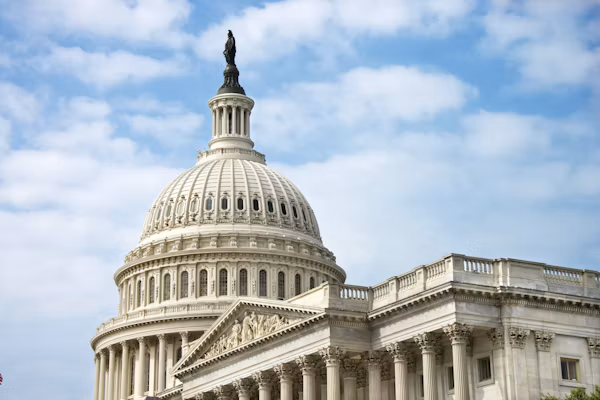
From historic Senate victories to a Democratic takeover of Congress, America’s 2026 midterm elections have delivered a powerful reminder: political power may be won at the ballot, but retaining public confidence is an entirely different battle
A political earthquake in Washington
Every two years, Americans return to the ballot box to elect members of Congress. But not every midterm election carries the same political weight. The November 3, 2026 elections have produced a result that will significantly alter the political landscape in Washington, delivering Democrats control of both the House of Representatives and the Senate in a stunning setback for President Donald Trump and the Republican Party.
For a president who returned to the White House in 2024 with a promise to reshape American politics, the results represent a significant interruption of that political project. Democrats have flipped at least seven Senate seats, gained more than two dozen seats in the House and made substantial advances in gubernatorial races. What makes the outcome particularly striking is that several victories came in states that have traditionally leaned Republican, including Texas, Kansas, Iowa and South Carolina. AP News+2
This was not simply a change in congressional numbers. It was a political statement from an electorate increasingly concerned about the direction of the country.
The numbers tell a bigger story
The most consequential development is the Democrats’ capture of both chambers of Congress. Before the elections, Republicans controlled the House and Senate, giving Trump’s administration considerable room to advance its legislative priorities.
That arrangement is now changing.
The House of Representatives, with all 435 seats contested, is particularly important because it controls legislative business, federal spending legislation and oversight of the executive. Meanwhile, the Senate plays a critical role in confirming presidential appointments, including judges, ambassadors and senior government officials.
With Democrats now controlling both chambers, Trump’s administration faces a considerably more difficult political environment. Congressional investigations, scrutiny of executive decisions and resistance to presidential nominations are likely to feature prominently over the next two years. However, this does not mean Democrats can simply reverse the administration’s policies. Trump retains executive authority and presidential veto powers, while Senate procedures still create significant obstacles to passing major legislation. Investing.com+2
In other words, Washington is entering a new period of political negotiation, confrontation and accountability.
History was made beyond the party numbers
Perhaps the most fascinating aspect of these elections is the history made in individual states.
In Kansas, Democrat Adam Hamilton ended a 94-year drought, becoming the first Democrat elected to represent the state in the US Senate since 1932. In Texas, James Talarico secured a landmark victory, ending a Republican hold on the state’s Senate seat that had lasted since 1988. South Carolina also witnessed a significant political upset, electing Democrat Annie Andrews in a state where Republicans have dominated Senate elections for decades. AFP+1
The elections also delivered important milestones in political representation. Abdul El-Sayed’s victory in Michigan makes him the first Muslim elected to the US Senate, while Peggy Flanagan’s victory marks a historic breakthrough for Native American women in the Senate. Meanwhile, the new Democratic majority is expected to position Hakeem Jeffries to become the first Black Speaker of the House, should the party formally elect him to the position. AP News+1
These moments matter because elections are not only about which party governs. They also determine whose voices enter the institutions where national decisions are made.
What went wrong for the Republicans?
A major lesson from these elections is that presidential popularity and public confidence cannot be separated from the everyday economic experiences of citizens.
The cost of living, economic anxiety, dissatisfaction with the administration’s handling of the Iran war and concerns about governance emerged as important factors behind the Democratic gains. The results also suggest that Trump’s political influence, while still significant within the Republican Party, could not guarantee victories for candidates he supported.
Perhaps most tellingly, voters in traditionally Republican states demonstrated that political loyalty is not necessarily permanent. A candidate’s association with a popular president may help secure a party nomination, but it does not automatically translate into electoral support when citizens are dissatisfied with the broader political direction.
The Democratic victories among younger voters and Latino communities also point to changing electoral dynamics. According to NBC exit polls reported by AFP, voters aged 18–29 backed Democratic candidates by 72% to 25%, while Latino voters supported Democrats by 62% to 35%. These figures suggest a significant shift from the coalitions that helped deliver Trump’s 2024 victory. AFP+1
The message is worth paying attention to: political movements can mobilise voters around promises, but governing requires delivering results.
Why Kenya should be paying attention
For Kenya, an election happening thousands of kilometres away may appear to be an American domestic affair. It is anything but.
The United States remains an important economic, diplomatic, security and development partner for Kenya. The direction of American foreign policy has implications for trade relations, development assistance, regional security cooperation, investment and diplomatic engagement across Africa.
A Democratic-controlled Congress introduces another layer of scrutiny into how the United States approaches these relationships. Congressional committees can question foreign policy decisions, examine development assistance allocations and influence the legislative environment surrounding international trade and cooperation.
For Kenya, this matters particularly as the country navigates its economic relationship with Washington, its regional security commitments and its broader diplomatic positioning.
However, it would be premature to interpret a Democratic congressional victory as an immediate reversal of Trump’s Africa policy. American foreign policy is shaped by several institutions, including the presidency, Congress and the wider diplomatic and security establishment. What changes is the political environment within which these decisions are made.
There is also a lesson here for Kenya’s own democratic conversations.
In 2027, Kenyans will once again head into a general election, with questions around the economy, public debt, taxation, employment, accountability and the credibility of political promises likely to dominate public debate.
America’s midterms demonstrate the importance of elections between presidential cycles. Citizens do not have to wait for another presidential election to influence the balance of political power. Through legislative elections, they can change parliamentary majorities, strengthen oversight and reshape the political calculations of an incumbent administration.
For Kenya, where parliamentary oversight, party loyalty and executive accountability remain important governance questions, this is a particularly relevant conversation.
The bigger lesson: Winning an election is not the same as winning public confidence
The 2026 US midterms offer a reminder that democratic legitimacy is continuously tested, not permanently secured through a presidential victory.
Donald Trump won the presidency in 2024. Two years later, voters have handed control of Congress to his political opponents. The presidency remains his, but the political environment around it has fundamentally changed.
For Democrats, the victory brings an opportunity to demonstrate that opposition politics can translate into credible governance. For Republicans, it raises difficult questions about the durability of their political coalition and the public’s response to their governing record.
And for the rest of the world, particularly countries such as Kenya that maintain important relationships with Washington, the results are a reminder that American politics does not stand still.
Ultimately, the most important message from these midterms may not be that Democrats won or Republicans lost. It is that voters retain the power to change the political equation, even when the president is not on the ballot.
Democracy does not end after an election. Sometimes, its most consequential decisions happen in between.
Discover more from The List KE
Subscribe to get the latest posts sent to your email.